The Party-Size Math Every Independent Restaurant Should Run
A party of six is not simply six covers. It is a different unit of revenue, labor and risk — and most operators never run the numbers.
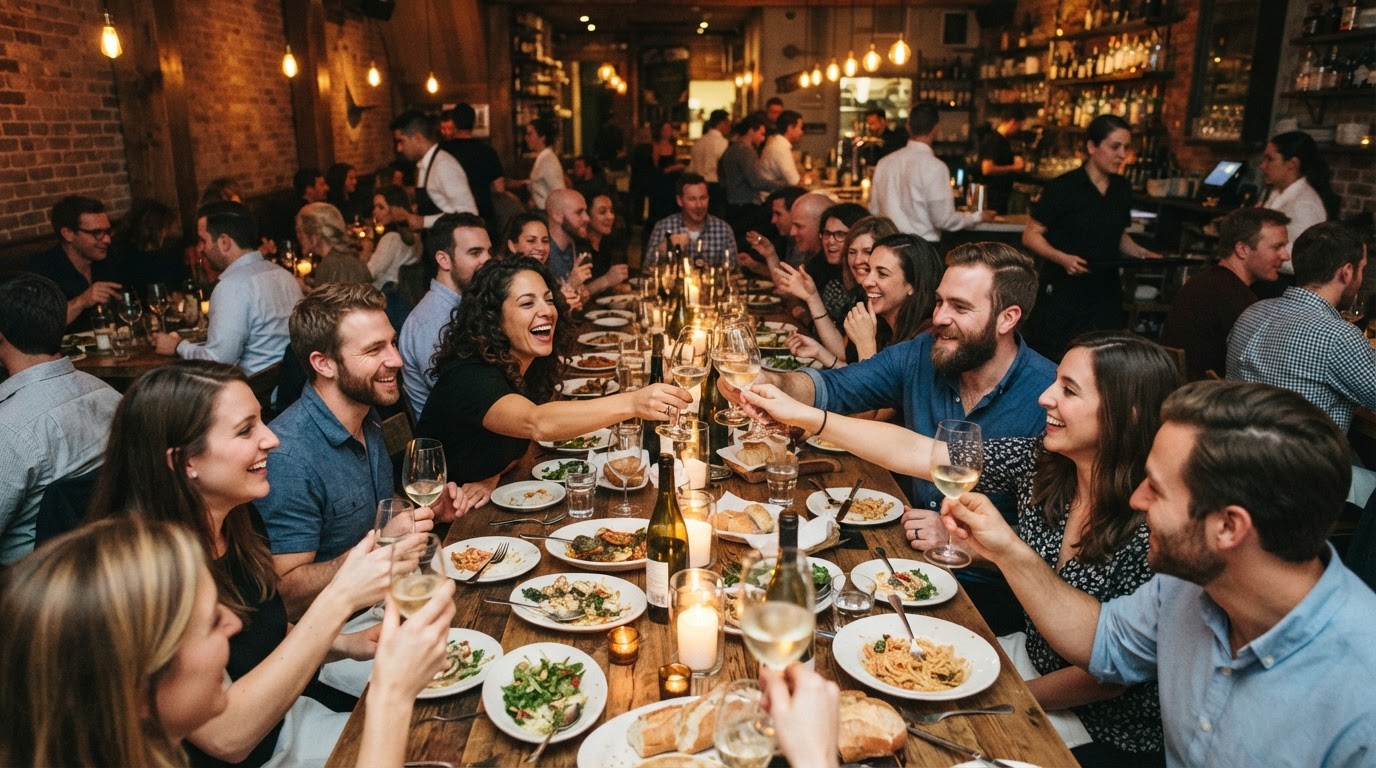
Celebration parties behave like a different product than two-top dining. We walk through the unit economics — check average, table time, labor and no-show risk — using a transparent, fully-labeled hypothetical model. No real restaurant's numbers are claimed; the model is a tool for operators to plug in their own.
1.A party is a different unit
Most restaurant accounting treats a cover as a cover. But a six-top celebration behaves differently from three two-tops in nearly every dimension that matters: average check, table time, labor intensity, and the cost of an empty seat if the party no-shows.
Running the math on party-size economics is the single highest-leverage analysis an independent operator can do. It tells you whether celebration business is actually profitable for your room, or whether it is quietly subsidizing a worse mix.
2.A transparent model
Below is a fully-labeled hypothetical. Every number is an assumption you should replace with your own. The point is the structure of the calculation, not the specific figures.
All figures are illustrative assumptions for a hypothetical independent restaurant. Replace with your own.
| Metric | 3 × two-tops | 1 × six-top celebration |
|---|---|---|
| Covers | 6 | 6 |
| Avg check per cover | $32 | $41 |
| Total check | $192 | $246 |
| Table time (min) | 60 | 105 |
| Revenue per table-hour | $192 | $140 |
| Labor minutes per cover | 4 | 6 |
| No-show risk | Low | Higher |
Source: BVC hypothetical model — illustrative only
3.What the math reveals
The hypothetical above illustrates a pattern operators often feel but rarely quantify: the celebration six-top produces a higher total check but lower revenue per table-hour, because the party stays longer. That is not necessarily bad — if the total contribution dollars and the likelihood of a return visit are high enough, the lower table-hour yield is worth it.
The decision hinges on two numbers most operators do not track: the return rate of celebration parties, and the incremental labor cost of servicing a large party. If either is weak, the celebration business is less profitable than it appears.
4.Managing the downside
The two risks unique to large-party business are no-shows and table-time drag. Both are manageable. Deposits or card-on-file policies reduce no-show risk; structured celebration menus with pre-orders compress decision time and improve kitchen flow; and a defined 'cake fee' or corkage policy converts a cost center into a small revenue line.
None of this requires new technology. It requires deciding that celebration bookings are a product with their own terms, rather than a larger version of a normal reservation.
Research methodology & limitations
Methodology
This article presents a static, hypothetical unit-economics model. No figures are drawn from any real restaurant's financials. The model is a template for operators to populate with their own data.
Limitations
The model excludes fixed-cost allocation and assumes full utilization of freed tables, which real rooms rarely achieve. Actual results will vary with concept, market and service model.
Sources & citations
- [NRA 2025]National Restaurant Association, 2025 State of the Restaurant Industry https://restaurant.org/research-and-media/research/research-reports/
About Birthday VIP Club
Birthday VIP Club is a curated, celebration-focused restaurant discovery and marketing marketplace for independent restaurants. We help operators become the obvious choice for the next occasion — without commission-based reservations or perpetual discounts.
Learn how BVC works for independent restaurantsRelated articles
The Celebration Economy: Why Americans Spend $100 Billion Marking Moments
Birthdays, anniversaries and milestones have quietly become one of the most resilient categories in consumer spending. Here is what the data shows — and what it means for the restaurants that host them.
The Return Rate: The One Metric That Predicts Independent Restaurant Survival
New-customer acquisition gets the attention. Repeat celebration bookings predict the future. Here is how to measure and move it.